

Selecting a construction contractor is one of the most consequential decisions a homeowner, developer, or business will make when planning a building or road project. The wrong choice can lead to structural defects, budget overruns, missed deadlines, and disputes that drag on for months or years after the project should have been completed. This guide walks through the key factors Kisii residents should evaluate before signing a contract with any construction company, and explains why regulatory registration should be the first, not the last, item on your checklist.
Why Contractor Selection Matters More Than Most People Realize
Many homeowners in Kisii approach contractor selection based primarily on price, choosing whoever offers the lowest quotation without adequately investigating the contractor’s registration status, track record, or technical capacity. This approach frequently backfires, since the true cost of a poorly executed construction project extends far beyond the initial contract price, including rework costs, extended timelines, and in serious cases, structural defects that compromise the safety and value of the finished building.
Understanding what actually differentiates a reliable contractor from an unreliable one, before signing any agreement, is the single most effective way to protect a construction investment in Kisii’s market.
Step One: Verify NCA Registration
The National Construction Authority (NCA) is the government body responsible for regulating contractors operating in Kenya, and NCA registration should be the very first thing any client verifies before engaging a construction company. Contractors are categorized by the type and scale of work they are licensed to undertake, ranging from NCA1 (the highest category, permitted to handle the largest and most complex projects) down through lower categories suited to smaller-scale work.
Prisam Co. Limited is registered under Category NCA5 for Building Works and Road Works, a registration that confirms our company has met the National Construction Authority’s requirements for technical capacity, safety compliance, and professional conduct within this category of construction work. Clients should always ask a prospective contractor for their NCA registration certificate and registration category, and can verify this information directly through the National Construction Authority’s official channels if there is any doubt about a contractor’s claims.
Engaging an unregistered contractor, regardless of how competitively priced their quotation might be, removes an important layer of accountability and consumer protection that registered contractors are bound by.
Step Two: Confirm Tax Compliance
A legitimate, professionally run construction company should hold a valid Kenya Revenue Authority (KRA) Tax Compliance Certificate. This certificate confirms that a company is properly registered as a taxpaying entity and meeting its statutory obligations, which is a reasonable proxy for overall business legitimacy and financial stability.
Prisam Co. Limited maintains full KRA tax compliance, and clients are encouraged to request this documentation from any contractor before entering into a significant construction agreement. A contractor unwilling or unable to produce basic tax compliance documentation should raise immediate concern.
Step Three: Check Company Registration Status
Beyond sector-specific registration, clients should confirm that a construction company is properly registered as a legal business entity, whether as a sole proprietorship, partnership, or private limited company under the Companies Act, 2015. Prisam Co. Limited is registered as a private limited company, incorporated in 2020, which provides clients with a formal, legally accountable entity to contract with, rather than an informal arrangement with an individual builder operating without any registered business structure.
This distinction matters significantly if a dispute ever arises during or after construction, since a properly registered company provides a clear legal entity against which grievances can be formally raised, unlike informal arrangements that offer little practical recourse.
Step Four: Review Past Project Experience
A contractor’s portfolio of completed projects offers valuable insight into their capability and style range. Ask to see photographs or, ideally, visit completed projects in person to assess the quality of finishing, structural soundness, and overall workmanship. Pay particular attention to details that are easy to overlook in photographs but critical in person, such as wall straightness, tile alignment, roofline consistency, and the quality of joinery around doors and windows.
Prisam Co. Limited’s project portfolio spans a range of residential styles, from contemporary two-storey designs with rooftop living spaces to classic Kisii family homes with red tile roofing and columned verandas, reflecting both design versatility and the technical capacity to execute a range of architectural styles to a consistent standard.
Step Five: Assess Equipment Ownership
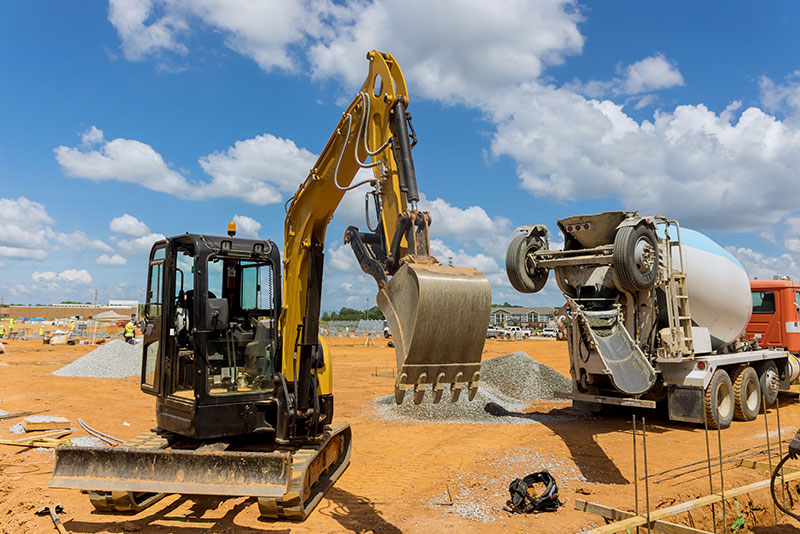
A contractor’s equipment situation has a direct impact on project timelines and cost predictability. Contractors who own their own excavation and earthmoving equipment, rather than relying entirely on third-party hire arrangements, are typically able to offer more reliable scheduling, since project timelines are not held hostage to another company’s equipment availability.
Prisam Co. Limited maintains its own excavation equipment, giving us direct control over site preparation and earthworks scheduling, a factor that meaningfully reduces the delays commonly experienced with contractors who must source machinery externally for every project.
Step Six: Insist on a Detailed, Itemized Quotation
One of the clearest warning signs of an unreliable contractor is a vague, lump-sum quotation that does not break down costs by construction stage or material category. A professional contractor should be able to provide a detailed quotation itemizing site preparation, foundation work, structural materials, roofing, labor, finishes, and any applicable professional or regulatory fees.
This level of detail serves two purposes: it allows the client to understand exactly what they are paying for at each stage, and it protects both parties from disputes later in the project, since deviations from the original scope can be clearly identified and addressed through a formal variation process rather than informal, undocumented negotiation.
Step Seven: Clarify the Payment Schedule
Construction payment schedules should be tied to verifiable project milestones, such as completion of foundation work, completion of walling and roofing, and final finishing, rather than requiring large upfront payments before any visible work has been completed. Clients should be cautious of any contractor insisting on receiving the majority of the contract value before substantial work has begun, since this arrangement removes much of the client’s leverage if problems arise later in the project.
A milestone-based payment structure, agreed upon in writing before construction begins, protects both the client’s financial interests and the contractor’s ability to manage cash flow responsibly across the project timeline.
Step Eight: Establish Clear Communication Expectations
Construction projects, particularly those extending over several months, require consistent communication between contractor and client. Before signing any agreement, clarify how regularly the contractor will provide progress updates, who the primary point of contact will be for questions or concerns during construction, and how change requests or unexpected issues will be communicated and resolved.
A contractor who is difficult to reach or vague about communication practices during the initial engagement period is unlikely to become more responsive once construction is underway and full payment has been secured.
Step Nine: Ask About Structural Engineering Involvement
For any project beyond a simple single-storey structure, structural engineering input is essential, particularly for foundation design, load-bearing wall placement, and roof truss engineering. Ask prospective contractors whether structural engineering is handled in-house, through a qualified partner engineer, or left entirely to the client to source independently.
Prisam Co. Limited’s project management approach incorporates proper structural planning as a standard part of our building process, ensuring that foundation and structural decisions are made based on sound engineering practice rather than guesswork or generic assumptions that don’t account for a specific site’s soil conditions and design requirements.
Step Ten: Get Everything in Writing
Every commitment made during the negotiation phase, including scope of work, materials specification, timeline, payment schedule, and any verbal assurances about quality or finishing standards, should be captured in a written contract before construction begins. Verbal agreements, however well-intentioned at the time, become a significant source of dispute once a project is underway and memories of what was originally discussed begin to diverge between client and contractor.
A written contract protects both parties and provides a clear reference point for resolving any disagreements that arise during the course of construction.
Red Flags to Watch For
Beyond the positive checklist above, certain warning signs should prompt serious caution before engaging any contractor. Be wary of quotations that seem significantly below the market range outlined in typical Kisii construction cost guides, since unrealistically low pricing often signals corner-cutting on materials or labor quality that will surface as problems later. Be cautious of contractors who cannot produce NCA registration, KRA tax compliance, or company registration documentation when asked directly. Avoid contractors who pressure clients into large upfront payments before any physical work has commenced, and be skeptical of vague, non-itemized quotations that make it difficult to understand exactly what is included in the contract price.
Why Prisam Co. Limited Meets Every Item on This Checklist
Prisam Co. Limited was built specifically around the principle that proper registration, transparent processes, and technical competence protect both our clients and our own reputation as a contractor in the Kisii market. We are registered under NCA Category 5 for Building Works and Road Works, fully compliant with the Kenya Revenue Authority, and formally incorporated as a private limited company under the Companies Act, 2015. We maintain our own excavation equipment, provide detailed itemized quotations for every project, and structure payments around verifiable project milestones rather than demanding disproportionate upfront payment.
Our project portfolio reflects a range of residential styles across Kisii and Nyamira counties, and our team remains directly accessible to clients throughout every stage of construction, from initial site assessment through final handover.
Start Your Project with a Contractor You Can Verify and Trust
Choosing the right contractor is the single most important decision in any construction project, and it is a decision best made based on verifiable credentials and documented track record rather than price alone. Contact Prisam Co. Limited at 0701-270-344 or visit our head office at Kwanza Place, Kisumu Road, Fifth Floor Suite 35, Kisii, to request our registration documentation, review our project portfolio, and receive a detailed, itemized quotation for your building or road construction project.